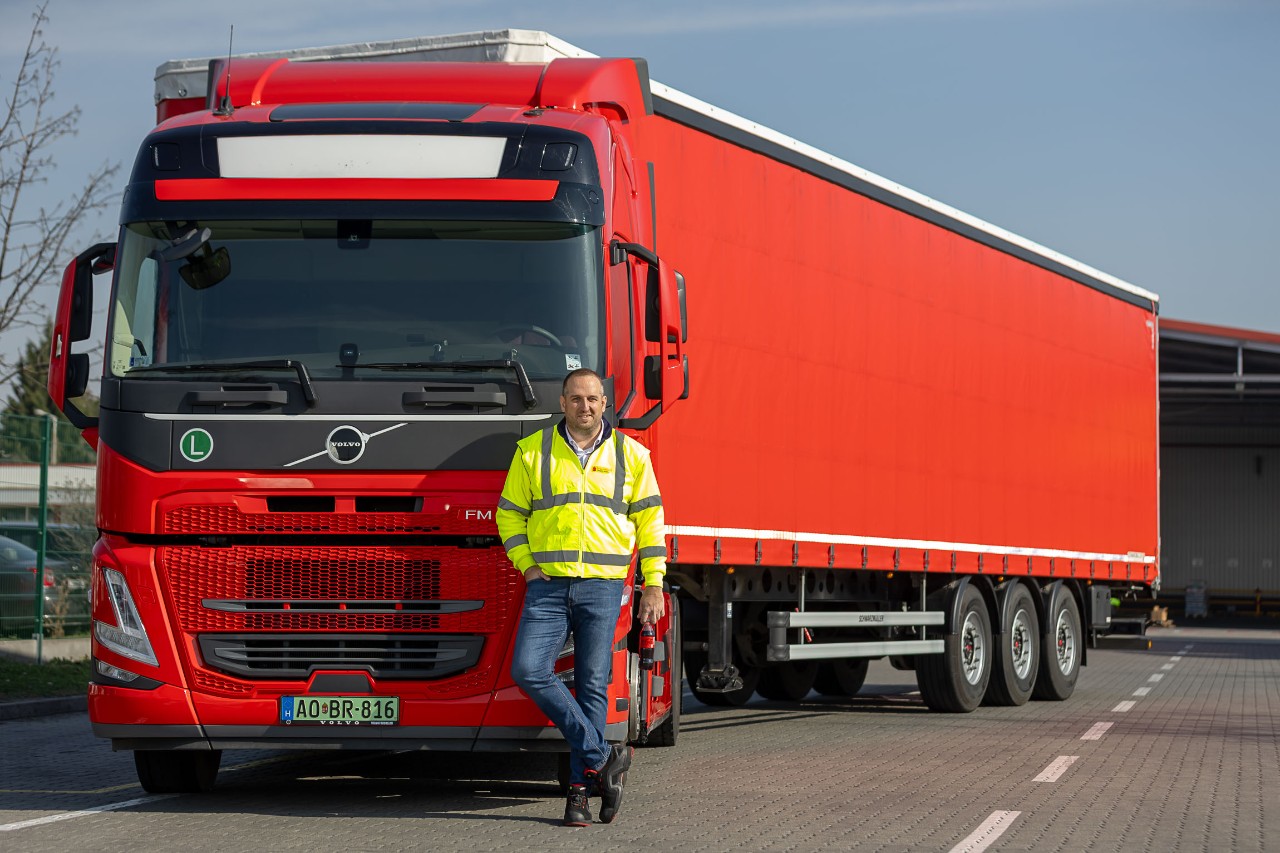
The nationwide distribution network, built around two domestic production plants – Dunaharaszti and Zalaszentgrót – and eight logistics centres, was previously served entirely by a diesel-powered vehicle fleet. In recent years, alternative fuel vehicles have been gradually integrated into this system: alongside the LNG-powered and electric trucks operated by transport partners, electric trucks and vans have also been added to the company’s own fleet.
This development is particularly significant because Coca-Cola HBC Hungary’s logistics operations simultaneously serve short- and long-distance transportation needs, customer orders, inter-depot goods transfers and urban distribution. Thanks to their range of 850–900 kilometres, LNG-powered trucks are primarily used for depot-to-depot transport and long-distance customer deliveries, while electric trucks with a range of approximately 300 kilometres play an important role in distribution tasks in Budapest and the surrounding areas. Based on experience to date, alternative fuel vehicles can be integrated into the system reliably: their operation does not require higher expenditure, and their failure rates do not differ significantly from those of conventional vehicles. In the long term, the initiative forms part of a phased development roadmap supporting gradual transition, through which the company is expanding its low-emission fleet and further strengthening its sustainable logistics operations based on practical experience.
At present, the green vehicle fleet supporting logistics operations includes three LNG-powered and three electric trucks operated by transport partners, while the company’s own fleet comprises two electric trucks and six electric vans supporting daily operations. The company continuously monitors vehicle mileage and estimates the emission reductions achieved using alternative fuel technologies compared to diesel vehicles. Between 2023 and 2025, alternative fuel vehicles used in Coca-Cola HBC Hungary’s logistics system covered nearly 943,000 kilometres, resulting in CO₂ savings of more than 335 tonnes.